
A social worker to social worker reflection on bias, science and the cost of getting it wrong.
I don’t know how to get my boy back. I don’t mean that he has disappeared. He’s still here. He’s still funny, beautiful, loving and full of personality. But the anger is becoming louder. The bubbles and fizzes that we have lived with at home are now spilling into other parts of his life. School is struggling. There is increasing contact with the police. And I am frightened about what comes next.
I am his mum. I am also a social worker. And I am left with a sadness and an anger that I cannot quite put into words. Because I keep coming back to the same question: what might have been different if people had really seen him, understood what he carried and looked beyond what they could see in front of them?
I cannot say that different professional responses would definitely have changed his pathway. Nobody can know that. But I do know that I was asking for help. I was trying to explain that there was more going on than behaviour, more to understand than what was happening in the moment. And I don’t think we always got that understanding.
Three days at NCASC, and a workshop on professional bias, brought much of this back to the surface. I found myself becoming emotional, not simply because I recognised the subject professionally, but because I recognised it personally. I have sat on both sides of that desk. I know what it means to be the professional forming an opinion, and I know what it feels like to be the parent whose account, knowledge or concerns don’t quite fit the professional narrative.
I know what it feels like when the way you are perceived begins to influence the way your child is understood. When different professional opinions exist, but one narrative gradually becomes more powerful than another. When you are trying to explain something that you believe is being missed, but the conversation moves further and further away from the child.
And I have to wonder whether, when a parent is also a professional, the outcome is any different. Does professional knowledge create an opportunity for a more informed conversation, or does it sometimes become a battle of professional authority? When a parent understands the system, questions an assessment or challenges a professional opinion, do we become more curious, or do we go into fight mode?
I don’t have a universal answer. But I know what it felt like for me. I adopted a little boy with a history of significant early harm. His experiences before coming into our family had already shaped his little life in ways that we were only beginning to understand.
He was, and still is, a beautiful boy. Funny, charming, loving and full of personality. He could make you laugh in a heartbeat. He has a warmth and a spark that I wish everyone could see.
But there was another side to his experience. His emotional responses could be enormous. His anger, his fear, his dysregulation and the violence within our home became increasingly difficult to manage. His siblings were affected. I was affected. We were a family trying to understand and live with something that was bigger than the parenting strategies and support we were being offered.
Early assessments recognised the significance of his history, his developmental needs and the possibility that he presented differently in different environments. There was recognition that he could mask, that what people saw in a structured setting might not reflect what was happening elsewhere. A psychological assessment considered the complexity of his emotional needs and the impact of his early experiences.
Later professional views were markedly different. The emphasis changed. Earlier understandings seemed to lose their influence. The same child, with the same history, was being understood through a very different lens. The explanations changed, and so did the narrative about what was happening within our family.
I still struggle with that. Of course, professional opinions can differ. We should welcome different perspectives. Assessments develop, new information emerges and sometimes we get things wrong. That’s human.
But when views differ so significantly, shouldn’t that make us stop and think? Shouldn’t we be asking why? What evidence supports one interpretation over another? Have we considered all the information? Have we looked at the child’s developmental journey, or have we become too focused on what we can see in front of us?
And are we sufficiently equipped to understand what we are looking at? I think we need to have a much more honest conversation about the science underpinning our practice.
We talk about trauma, attachment and adverse childhood experiences. But early developmental disruption is wider than trauma alone. It can involve prenatal influences, neurodevelopmental differences, biological factors, neurological injury, sensory processing, memory, executive functioning, relationships and lived adversity. These things don’t sit in separate boxes. They interact and accumulate over time.
A child’s developing brain and nervous system are shaped by their experiences, their biology and the environments in which they grow. A child can be verbally able but struggle with functional understanding. Their chronological age can be very different from their developmental functioning. They can appear to manage in one environment and unravel in another. They can know what is expected but be unable to access that knowledge when overwhelmed.
We need to understand the difference between what a child can say, what they know, what they can retain and what they can actually do when life becomes difficult. These aren’t excuses for behaviour. They are essential considerations if we are going to understand children properly.
I sometimes think we have become very good at describing behaviour, but not always so good at understanding it. And when we don’t understand it, we risk responding to the wrong thing.
What happens when a parent is trying to tell us that we’re missing something? What happens when they bring their own knowledge, experience and research into the room? Do we consider it, or does it become a challenge to our professional authority?
I am not saying my view should automatically have been accepted because I am a social worker, or because I am his mum. I am saying it should have been explored alongside the other evidence. The earlier assessments, the psychological opinion, the child’s history, his presentation across different environments and the science all mattered.
None of us had the whole picture on our own. That should have been the starting point. Instead, I experienced a growing gap between what I believed my child needed and how his needs were being understood.
And the consequences haven’t simply disappeared. The bubbles and fizzes I tried to explain years ago are no longer just happening at home. School is struggling. There is increasing contact with the police. The difficulties I was so worried about are becoming visible to a much wider world.
And right now, my son is in crisis. That is a difficult thing to write. Because alongside my campaigning, my professional work and my determination to challenge systems, I am still a mum watching her child struggle. I am still frightened about his future. And I am devastated that we never got to change his pathway. It makes me incredibly sad that his beauty is becoming more difficult for other people to see.
It hasn’t disappeared. But his anger is more visible than his vulnerability. His behaviour is taking up more space than the little boy behind it. I worry that people are increasingly seeing the fizzes and bubbles, rather than trying to understand what is causing them.
I wish someone had taken a moment, years ago, to think wider. To use a different lens. To consider the science, the developmental picture and the possibility that there was far more happening than could be understood through the behaviour being presented.
I cannot say that a different response would definitely have prevented the crisis we are facing now. Nobody can. But I was asking for help. I was asking for his needs to be understood, not just his behaviour managed.
And I cannot help wondering what opportunities were lost. There is another part of this that I find difficult to reconcile: accountability.
What happens when a family believes professional practice has caused harm, but there is no meaningful opportunity for that harm to be acknowledged? When the family is left trying to make sense of what happened, while the professionals and systems involved move on?
How do you challenge a professional narrative when that narrative has already shaped how you are viewed? How do you seek accountability when you fear that doing so might invite further scrutiny, further bias or another round of having to defend yourself?
There is a particular vulnerability in being a parent who has already experienced professional power being used in a way that felt deeply unfair. You start weighing every word. You think about the consequences of speaking out. You worry that challenging what happened might somehow become another reason to question you.
And so the very people who need to be able to speak openly about their experiences can become frightened of doing so. That should concern us.
Accountability cannot simply mean having a complaints process. It has to mean being willing to listen, examine practice honestly, acknowledge when things have gone wrong and learn from the consequences. It must be possible to challenge professional decisions without the person raising the concern fearing that they or their child will face further judgement.
And perhaps there is another layer to this for me. I haven’t walked away from social work. I haven’t lost faith in what the profession can be. In fact, I spend a significant amount of my time campaigning for better social work, better understanding of children and more meaningful support for families.
I want our profession to be better. I want us to be scientifically informed, trauma responsive, intellectually curious and brave enough to challenge our own practice. But I have also experienced what it feels like to be on the receiving end of professional bias, and I sometimes wonder whether I experience a different version of that when I campaign for change.
When you question established practice, challenge professional thinking or ask uncomfortable questions, how are you received? Is your contribution considered on its merits, or does the fact that you are challenging the system begin to influence how you are perceived?
Do people engage with the evidence, or form a view about the person presenting it? I find that difficult because I am not campaigning against social work. I am campaigning for it. I want a profession I can be proud of. One that recognises its limitations, learns from its mistakes and doesn’t confuse professional authority with being right.
But there is a cost to continually challenging the very systems you want to improve, particularly when your own experience has taught you how vulnerable that position can feel.
If we genuinely want a reflective profession, we have to make it safe for people to question, challenge and disagree. That includes parents, adopters, young people, practitioners and those campaigning for change. We cannot ask families to speak up while making challenge uncomfortable for the people who do it.
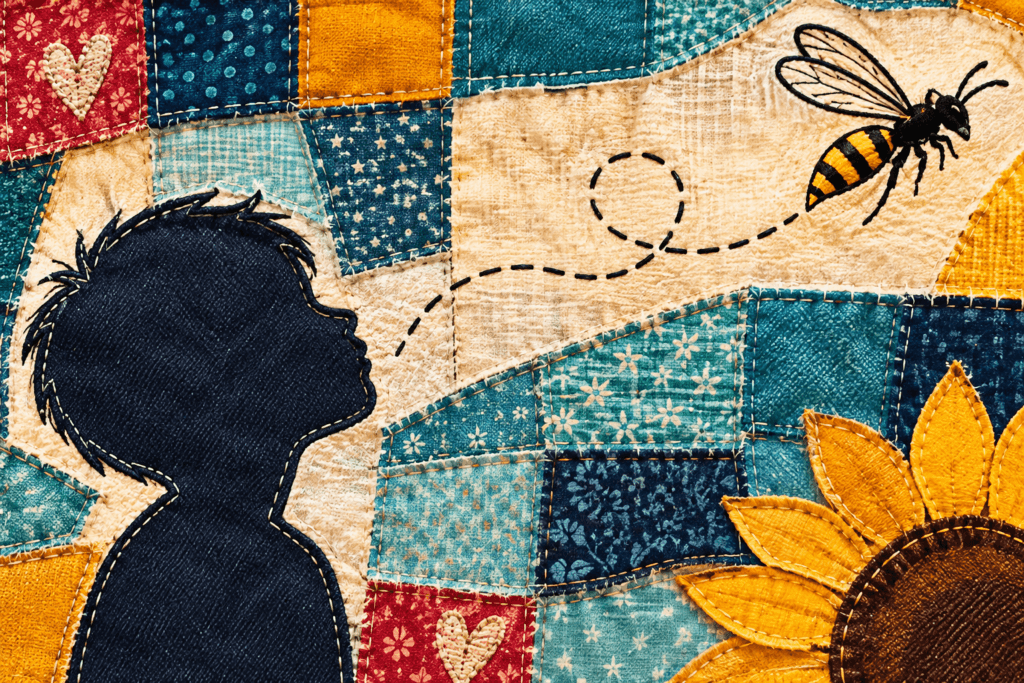
There are wasps in social work. I know that. I have experienced practice that has stung deeply, and I will continue to challenge it. But we cannot fight waspiness with more waspiness.
This isn’t about attacking individual social workers. It’s about asking what happens when professional identity, bias and the need to be right get in the way of understanding a child.
We need to be brave enough to question ourselves. To recognise the limits of our knowledge. To listen when someone offers a different perspective. To understand that professional authority does not make us infallible.
And we desperately need to keep up with the science. Because children are not simply their behaviour. They are not an incident, a presentation, a parenting assessment or a professional opinion. They are whole people, with whole histories and developmental journeys that deserve to be understood.
I don’t want people to read this and feel sorry for me. I want social workers to think.
Think about the child whose behaviour you are trying to understand. Think about the parent whose account doesn’t quite fit your assessment. Think about the professional opinion you have dismissed, the evidence you haven’t explored, the science you haven’t considered and the assumptions you may not even realise you are making.
And ask yourself whether you are genuinely seeing the whole child.
My son doesn’t get to pause his childhood while professionals work out whether they got it right. But the professionals seeing him now don’t see the whole of him. They just see his anger and behaviour. And it’s tragic. Because things could have been so different if people had just listened to all of us.
His childhood is happening now. His brain is developing. His experiences are shaping him. His relationships, opportunities and understanding of the world are being influenced by the responses of the adults around him.
And I don’t know how to get my boy back. I know there is no smart calculation to healing from harm that happened before words were formed. But I wish we could just go back and have that social worker see him and all that he carried, and respond with something more than bias.
A tragedy I will never overcome.
I can turn my anger into campaigning. I can use my professional experience to challenge, question and push for change. I will. But I cannot campaign away the sadness of watching my own child struggle, or the worry about what comes next.
I wish people could see what I see. I wish they could see the little boy behind the anger. I wish someone had looked wider when there was still time to explore what he needed.
We talk about putting the child at the centre of everything. But are we really doing that when our own bias, professional pride or limitations in knowledge get in the way?
Social worker to social worker, we have to do better. Not because parents expect us to get everything right. Not because we will never disagree. But because children cannot afford for us to stop being curious, to stop learning or to stop questioning ourselves.
Bias isn’t just a professional concept. It isn’t a slide in a presentation or something we acknowledge in a reflective supervision session. It has consequences. Real ones. For real children and families.
Sometimes those consequences are not immediately visible. Sometimes they take years to surface. And sometimes, by the time everyone can see the bubbles and fizzes, the child has been trying to tell us for years.
We cannot give children back the time we lose while trying to prove that we were right.