
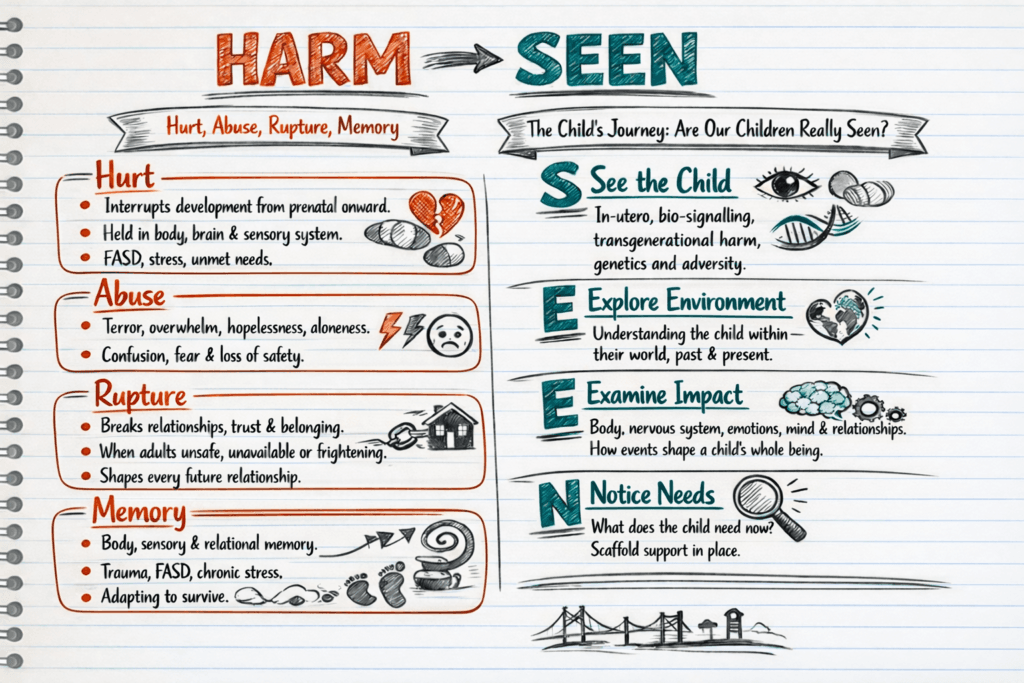
We do not see children by looking only at behaviour, crisis, or outcomes. We see them when we understand the developmental journey that shaped them. Too often, children’s needs remain hidden beneath labels, assumptions, missed opportunities, and systems focused on reaction rather than understanding. The result is families left struggling, children misunderstood, and crises that could have been prevented.
When we fail to recognise developmental disruption, trauma, neurodevelopmental difference, prenatal influences, and lived adversity as interconnected parts of a child’s story, support comes too late — or not at all. We respond to the fallout instead of addressing the need.
“Harm Seen” challenges us to stop looking away. To move beyond surface behaviours and begin truly seeing the whole child: their experiences, their vulnerabilities, their strengths, and the environments shaping them. Because when children are seen properly, support can happen earlier, relationships can strengthen, and outcomes can change.
If we want fewer children and families in crisis, we must stop ignoring what is in front of us — and start seeing.
Disrupted Childhood Development